ServicesRoof Treatments
Roof Algae and Moss Treatments in Saratoga Springs
Moss and black streaks are more than a cosmetic problem. They keep shingles damp and strip away the granules that shield them. Our gentle treatment halts the growth and helps your current roof stay in service longer.
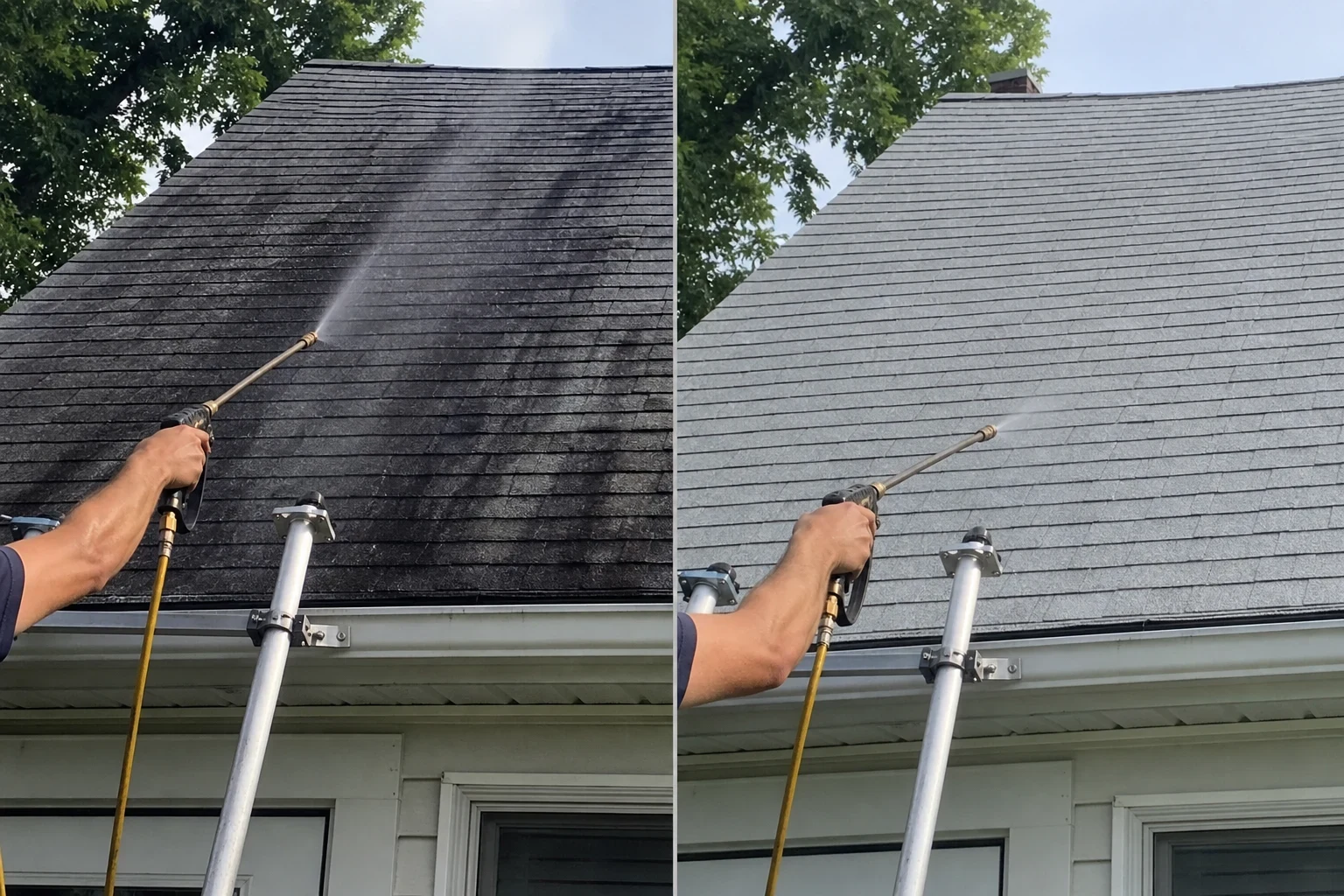
Care for the shingles you already have
A roof treatment is a low-pressure application that kills algae, moss and lichen where they grow. It does not involve high-pressure spray or anyone scraping at your shingles. The treatment soaks in, the growth dies back, and rain carries the remains off over the following weeks.
This is upkeep, not replacement. Most asphalt roofs with streaking or early moss are still structurally sound. Treating the growth early keeps the shingle granules in place, so the surface keeps shedding water and reflecting sun the way it was designed to.
It is the right call when the roof is sound but discolored, when moss is starting to collect along shaded edges, or when you want to slow regrowth on a roof that has been treated before.
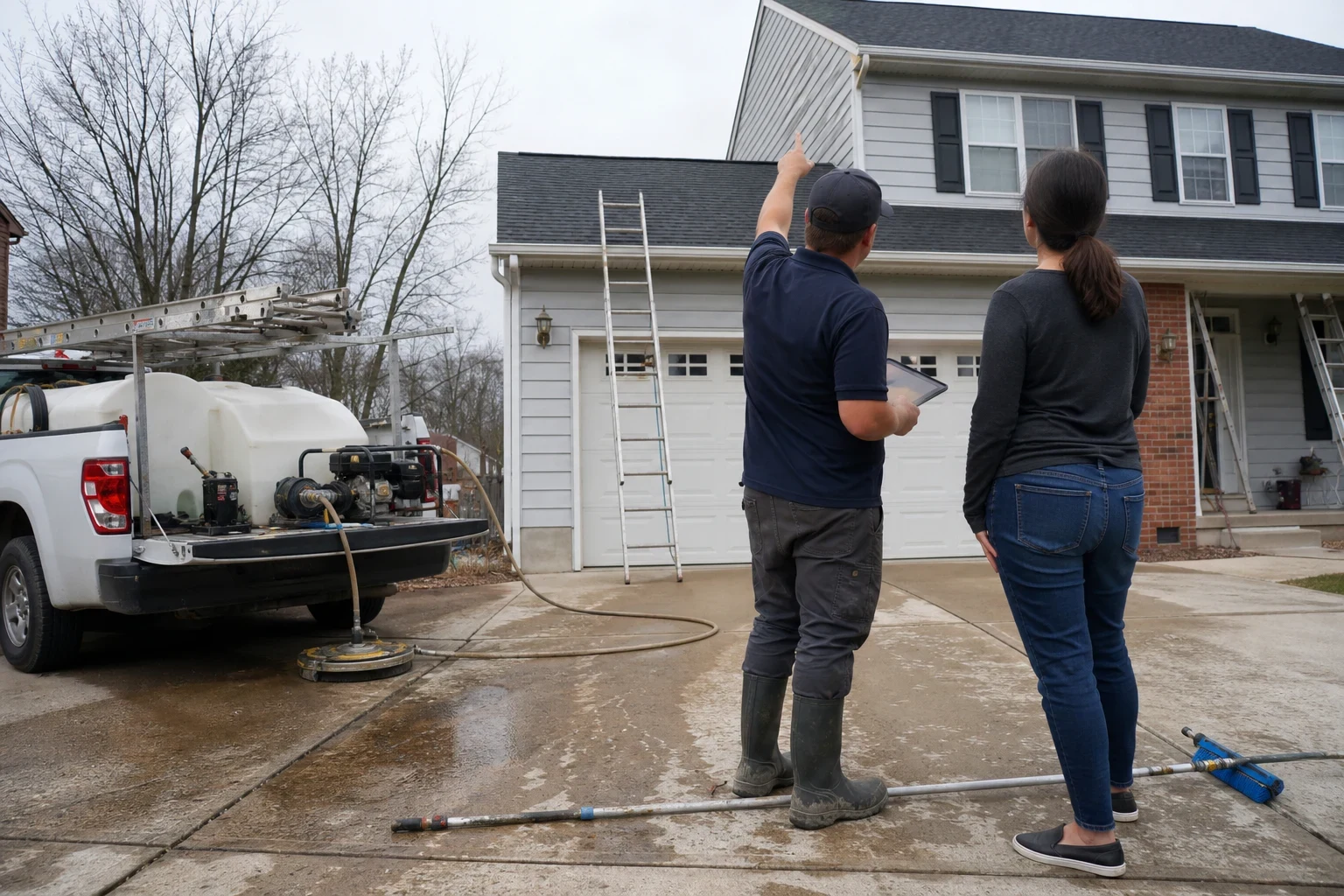
What a roof treatment includes
- 01
A close look before anything is applied
We check the shingles, flashing and roof edges first. If we see lifted tabs, cracked boots or heavy granule loss, we tell you and show you photos before we go further.
- 02
Low-pressure application
The treatment goes on at about the pressure of a garden hose. That protects the granule layer, which is the part of the shingle that does the real work.
- 03
Protection for plantings and surfaces
We wet down beds and shrubs below the drip line, cover delicate plants where needed and rinse them again when we finish.
- 04
Attention to fixtures on the roofline
If you have permanent lighting, cameras or other fixtures mounted along the eaves, we work around them carefully so tracks and wiring are left as we found them.
- 05
A plan for what comes next
Before we leave, we explain how the roof should look over the coming weeks and suggest a sensible interval for a follow-up treatment based on your exposure and shade.
Questions about Roof Treatments?
Call(518) 757-9353Signs your roof could use a treatment
Dark streaks on the north side
Those vertical black stains are usually algae feeding on the limestone filler in asphalt shingles. They spread slowly and rarely fade on their own.
Green moss along edges and valleys
Moss holds water against the shingles and can lift their edges as it grows. Through a Saratoga Springs winter, that trapped moisture freezes and thaws again and again.
Gray or pale crusty patches
Lichen clings tightly and grows slowly. Left alone, it can pit the shingle surface.
Granules collecting at downspouts
A buildup of sandy grit at the bottom of downspouts can mean growth is loosening the protective layer.
Overhanging trees and constant shade
Roofs that stay damp under branches grow moss fastest. These are good candidates for regular treatment even before growth shows.
How the day goes
- 1
Walk-around and roof check
We look over the roof, note the type and extent of growth, and point out anything that needs a roofer rather than a treatment.
- 2
Protect the ground below
Plants are pre-wet and covered where needed. We move outdoor furniture or decor out of the runoff path.
- 3
Apply the treatment
We work section by section at low pressure, paying closer attention to shaded slopes, valleys and the edges where moss tends to start.
- 4
Rinse and tidy up
Plantings get a final rinse, covers come off and everything we moved goes back in place. Most visits take part of a day.
- 5
Weeks of gradual results
Algae streaks usually lighten first. Moss and lichen dry out and loosen, then weather off with rain over the next several weeks.
What goes into the price
We price each roof by its own condition. After seeing it in person, we give you a plain quote before anything goes on the calendar, so the scope of the visit is clear.
- Size and slope of the roof
- A bigger roof takes more product and more time. Steeper slopes need added safety setup and slower, more careful work.
- How deep the growth runs
- Light streaks need less than thick mats of moss or lichen that has built up for years. Heavy growth can call for a second application.
- Getting around the house
- Narrow side yards, thick landscaping or a roof that rises over several levels all add to setup time.
- Regular follow-up visits
- Roofs treated on a steady interval tend to need less product each time, because the growth never gets well established.
Roof treatment questions
Will the streaks disappear the day you treat?
Some lightening often shows right away, but most of the change happens over the following weeks. The treatment kills the growth, and rain gradually carries it off. That slower approach is what keeps the shingles intact.
Is this safe for my asphalt shingles?
Yes. We apply at low pressure and use a treatment suited to asphalt roofing. Nothing is scraped or blasted, so the granule layer stays in place.
How often should a roof be treated?
It depends on shade and exposure. Sunny roofs may go a few years between treatments, while roofs under heavy tree cover benefit from more frequent care. We suggest an interval after seeing your roof.
What about my plants and lawn?
We wet and cover plants below the roof edge before we start and rinse them again when we finish. Most landscaping comes through without any trouble.
Can you treat a roof with permanent lighting already installed?
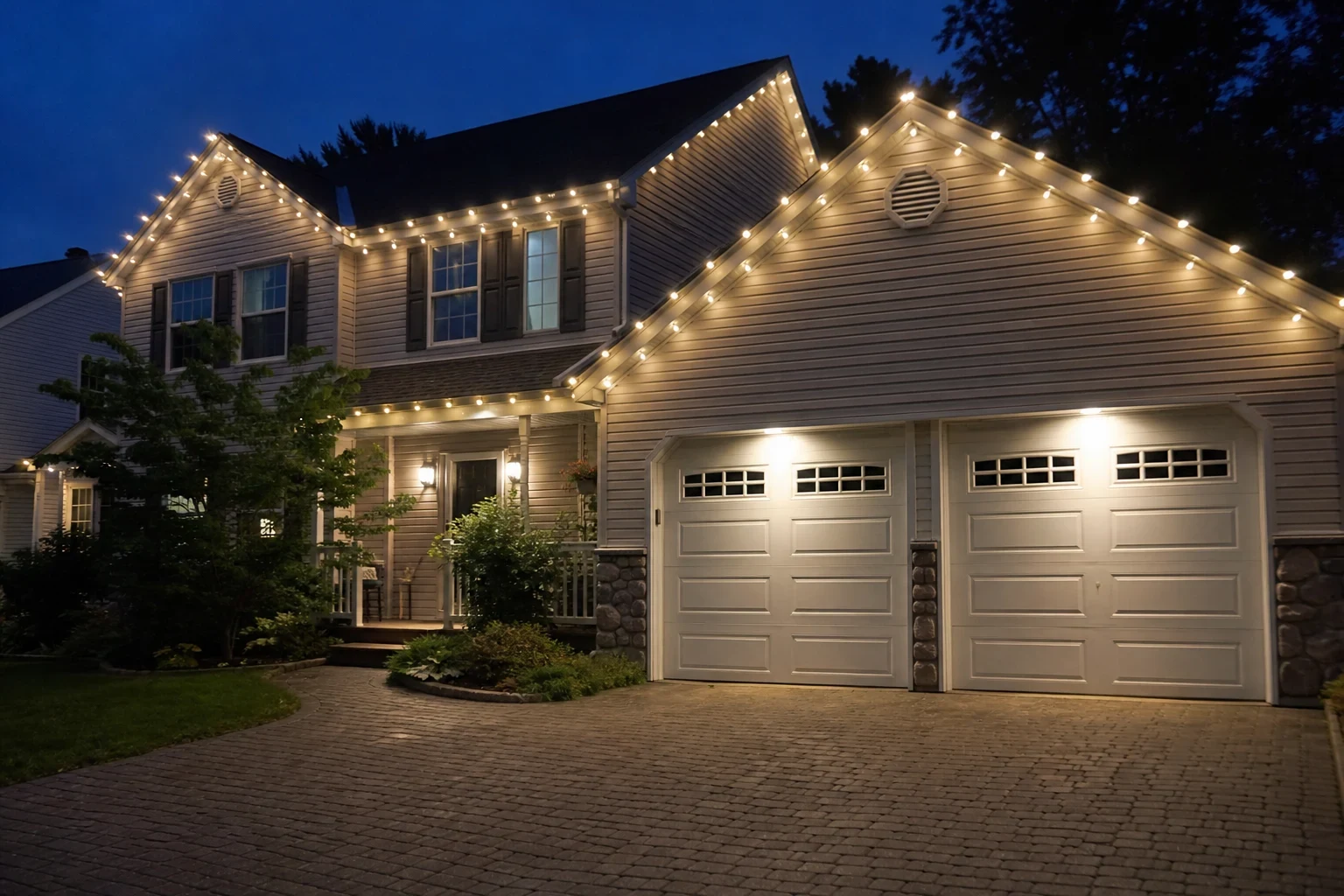
Yes. Permanent lighting is our other main service, so we know how those tracks and wires are mounted. We work around them and leave them clean and secure.
Can you do this in winter?
Treatments work best in mild, dry weather from spring through fall. Around Malta, Wilton and the rest of the area, we plan visits for days when the roof is clear of snow and temperatures are above freezing.
Help your roof wear the way it should
Tell us about the streaks or moss you are seeing and we will arrange a time to look. You will get an honest read on the roof and a clear price.